

Questions this support can help organize.
- What exactly is creating the pressure: volume, uncertainty, performance expectations, avoidance, perfectionism, skill gaps, or something else?
- Which deadlines and tasks are controllable right now?
- What routines are reducing recovery or making concentration harder?
- How does the student currently respond when overwhelmed?
- Which school, family, peer, tutoring, or professional supports are available?
- Is distress severe or persistent enough that a licensed mental-health provider should be involved?
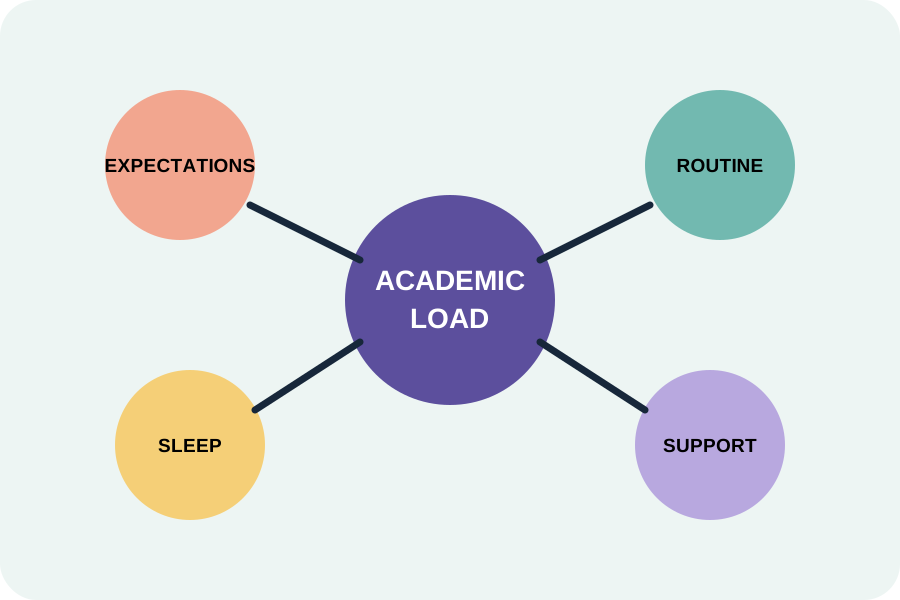
Typical workstreams.
Pressure map
Organize workload, expectations, recurring stress triggers, and the student's current response patterns.
Study structure
Break assignments, exams, and preparation into visible steps, priorities, and realistic study blocks.
Recovery routine
Protect sleep, breaks, transitions, and decompression so the plan is sustainable rather than based on constant urgency.
Help-seeking plan
Clarify when and how the student will ask teachers, peers, family, tutoring, disability support, or licensed professionals for help.
Possible outputs.
The exact output depends on the student's stage, scope, available information, and the educational question being addressed.
How this connects to the wider support system.
Educational consulting may work alongside teachers, tutors, school counselors, disability/access services, physicians, psychologists, therapists, learning evaluators, or other qualified providers. The right combination depends on the student's actual needs.