

Questions this support can help organize.
- When does avoidance happen and what usually happens immediately before it?
- Is the main barrier academic, social, sensory, routine-based, relational, health-related, or unclear?
- What is the student's own explanation of the difficulty?
- Which parts of the school day feel more possible versus less possible?
- What school or family responses currently reduce or intensify the pattern?
- Does the pattern suggest a need for licensed clinical evaluation or school-based assessment?
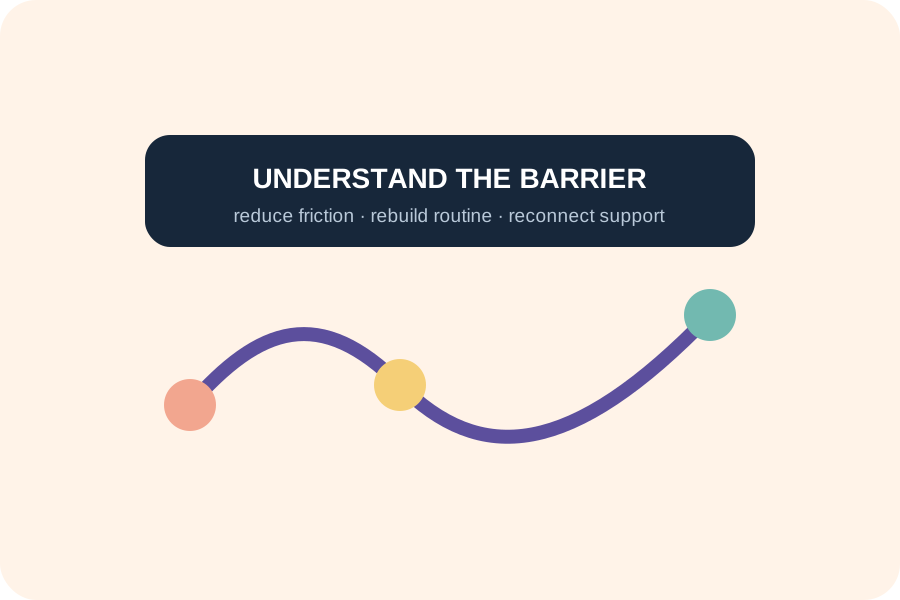
Typical workstreams.
Pattern mapping
Track timing, triggers, school demands, physical complaints, sleep, conflict, and what happens after avoidance.
Barrier reduction
Identify practical changes that make attendance or engagement more possible without pretending all barriers can be solved behaviorally.
Re-engagement steps
Create small, realistic participation or attendance goals coordinated with school and family when appropriate.
Referral & coordination
Identify when school staff, pediatric/medical care, licensed mental-health professionals, or learning evaluators should be involved.
Possible outputs.
The exact output depends on the student's stage, scope, available information, and the educational question being addressed.
How this connects to the wider support system.
Educational consulting may work alongside teachers, tutors, school counselors, disability/access services, physicians, psychologists, therapists, learning evaluators, or other qualified providers. The right combination depends on the student's actual needs.