

Questions this support can help organize.
- What academic expectations are likely to be new?
- How will the student structure sleep, meals, transportation, study time, and communication across time zones?
- What support services exist on campus and how are they accessed?
- How will the student build belonging rather than waiting for it to happen automatically?
- What will family communication look like when the student is struggling?
- What signs would indicate a need for local licensed mental-health or medical care?
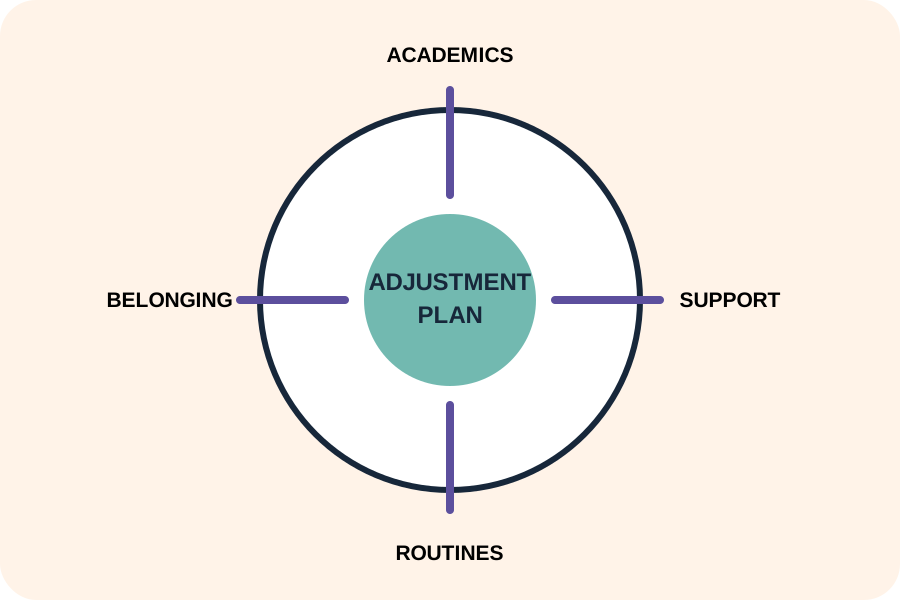
Typical workstreams.
Pre-departure plan
Academic expectations, practical routines, documents, support contacts, and family communication.
First-weeks routine
Study locations, schedule, help-seeking, sleep, meals, exercise, and social connection.
Adjustment review
Identify what is normal transition strain versus a pattern that is persistent, worsening, or impairing.
Support map
Campus advising, learning centers, disability/access offices, health services, counseling, trusted peers, and local resources.
Possible outputs.
The exact output depends on the student's stage, scope, available information, and the educational question being addressed.
How this connects to the wider support system.
Educational consulting may work alongside teachers, tutors, school counselors, disability/access services, physicians, psychologists, therapists, learning evaluators, or other qualified providers. The right combination depends on the student's actual needs.